
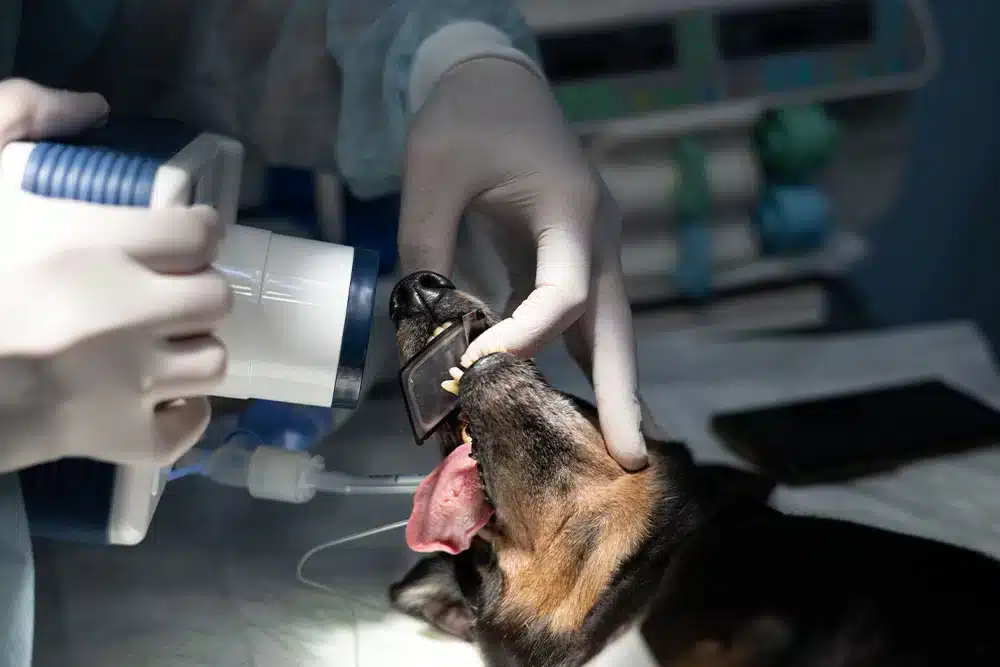
You know your pet needs dental care if you can see a broken tooth or inflamed gums, but what if a painful dental issue is completely invisible? It’s a surprising fact that more than half of dental disease in pets is hidden beneath the gums, where you can’t see it. This is why pet X-rays are so important; they provide veterinarians with a full picture of tooth roots and jawbone health, ensuring infections or fractures deep inside your pet’s mouth are found and treated before they cause more suffering.
At Rustebakke Veterinary Service, we combine advanced diagnostic imaging with compassionate care to detect hidden problems early, before they turn into emergencies. When you bring your pet to our Clarkston hospital, our veterinarians provide complete, gold-standard dental evaluations to support lifelong comfort and oral health.
Why Dental X-Rays Are Essential for Pet Health
Even if your pet’s teeth appear clean and bright, dental disease can still lurk below the surface. Plaque and bacteria often cause inflammation beneath the gums, gradually damaging roots and bone structure. Without X-rays, this hidden damage remains invisible during routine exams, allowing pain and infection to progress unnoticed.
Dental radiographs show far more than meets the eye. They capture every part of the tooth, from crown to root, and reveal the supporting bone that holds it in place. This allows veterinarians to identify bone loss, infection, abscesses, cysts, or retained roots that may not cause visible symptoms.
Unlike anesthesia-free dentals, which only clean surface tartar, professional imaging under anesthesia allows us to thoroughly assess every tooth and root. This approach aligns with AAHA dental guidelines for safe and effective veterinary dentistry. If your pet hasn’t had a dental X-ray before, now is an ideal time to schedule an appointment through our dental care services.
Common Dental Problems Identified With X-Rays
Radiographs often uncover significant disease even in pets whose mouths appear normal. Here are the most common issues we diagnose during routine imaging.
Periodontal Disease in Pets
Periodontal disease is the most widespread dental issue in dogs and cats, and it begins long before teeth become visibly loose. X-rays reveal early bone loss and infection below the gumline, helping veterinarians intervene before irreversible damage occurs. Left untreated, infection can even weaken the jawbone, increasing the risk of mandibular fractures, especially in small dogs.
Beyond oral health, bacteria from periodontal disease can enter the bloodstream and affect vital organs like the heart, liver, and kidneys, making early detection and treatment essential for your pet’s overall health. Many pets continue eating normally despite significant dental disease, masking their discomfort until radiographs uncover the hidden damage beneath apparently healthy-looking teeth.
Diagnosing Fractured Teeth
Pets love to chew, but bones, antlers, or hard toys can cause fractured teeth. Some cracks may appear minor yet expose the pulp or root, leading to infection. X-rays help us determine whether a damaged tooth can be saved or needs extraction. If your pet suddenly avoids chewing or seems sensitive around the mouth, schedule a same-day urgent exam to assess possible trauma.
Tooth Root Abscesses
Tooth root abscesses are severe infections that develop around the root of a tooth, usually occurring when bacteria enter through a fractured or traumatized tooth and travel down to the root tip. These infections are extremely painful and often cause facial swelling, reluctance to eat, drooling, and pawing at the face. X-rays are essential for diagnosing tooth root abscesses because the infection occurs deep within the bone where it’s not visible during a regular oral exam.
Malocclusions and Bite Alignment
Misaligned or overlapping teeth, known as malocclusions, can injure the palate, gums, or neighboring teeth. Radiographs clarify how deep the misalignment extends into the bone and guide decisions for correction, extraction, or management. These assessments are especially valuable for growing pets and breeds prone to jaw irregularities. Imaging detects developmental abnormalities like impacted teeth, missing roots, or malformed jaws, conditions best addressed early in life.
Tooth Resorption in Cats
Feline tooth resorption is one of the most painful yet frequently undiagnosed dental conditions. It starts beneath the gumline, gradually eroding tooth roots while the crown may still look normal. X-rays are the only way to confirm and classify this disease, allowing our veterinarians to perform complete extractions or other treatments to stop the pain.
Oral Tumors and Bone Involvement
When oral tumors are present, dental X-rays help determine whether the growth has invaded bone or displaced teeth. These findings guide surgical planning and ongoing monitoring. At Rustebakke Veterinary Service, our veterinarians work closely with specialists to ensure each patient receives the best possible outcome with compassion and clarity.
Dentigerous Cysts in Dogs and Cats
Dentigerous cysts are fluid-filled sacs that form around the crown of an unerupted tooth, most commonly affecting the mandibular first premolar in dogs, and are far more prevalent in brachycephalic breeds like Boxers, Pugs, Boston Terriers, and Shih Tzus. These cysts often present as simply a missing tooth with no other clinical signs, making dental radiographs essential for diagnosis, as the cyst remains hidden below the gumline and can silently expand over months or years. Left untreated, dentigerous cysts become locally destructive, causing displacement and resorption of adjacent teeth, significant bone loss, and even jaw fractures.
At Rustebakke Veterinary Service, our diagnostic tools allow us to identify these subtle changes early, providing targeted treatment and pain relief that preserves your pet’s comfort.
Why Cleanings Without X-Rays Miss Hidden Disease
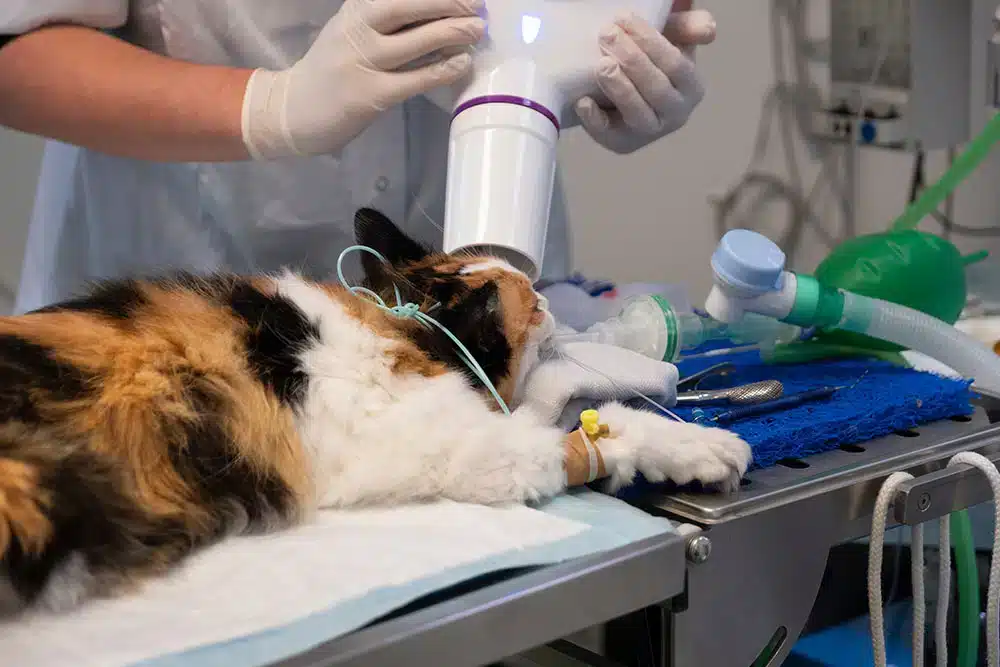
Anesthesia-free dentals in particular create a false sense of security by addressing only what you can see. True dental health requires anesthesia to safely perform full-mouth X-rays and scaling below the gumline, where the majority of disease occurs. While surface cleanings may make your pet’s teeth look bright, they cannot detect what’s happening below the gumline. Many pets who receive only cosmetic scaling continue to suffer from infection or bone loss that isn’t visible without radiographs.
Imaging is the foundation of accurate treatment planning. Following the AAHA dental guidelines, we use X-rays to decide whether a tooth should be extracted, repaired, or monitored. After surgery, we also use them to confirm healing and check for retained fragments or recurring infection. Our veterinary dental services always include imaging to ensure your pet’s oral health is evaluated completely and comfortably.
Comprehensive imaging isn’t just for sick pets, it’s a preventive tool that helps catch problems early, before they cause pain or expense. If your pet is due for a cleaning, schedule a visit through our request appointment form to ensure their dental exam includes complete imaging.
Frequently Asked Questions About Pet Dental X-Rays
Are pet dental X-rays safe?
Yes. Modern digital systems use very low radiation doses, making the process completely safe for pets.
Why do pets need anesthesia?
Anesthesia ensures accuracy, reduces stress, and allows thorough imaging of every tooth without pain or movement.
How often should my pet have X-rays?
Most pets benefit from full-mouth imaging during each professional cleaning, though certain cases, like past dental disease or extractions, may require more frequent checks.
What happens if a problem is found?
Your veterinarian will explain treatment options such as cleaning, extraction, or restoration, and guide you through home care for healing and comfort.
If you have more questions about dental X-rays or your pet’s oral health, our team is always happy to help.
Seeing the Full Oral Health Picture
Healthy teeth mean more than a bright smile, they’re essential for your pet’s overall well-being. Because so much of dental disease hides beneath the surface, X-rays are the only way to see the full picture and take action before pain or infection worsens.
At Rustebakke Veterinary Service, we’re proud to deliver complete, university-level dental care with a local touch. From preventive exams to advanced imaging and oral surgery, our veterinarians treat every patient with the same dedication we’d want for our own animals.
Schedule your pet’s next dental exam or contact us today to uncover what’s hidden, and help your pet enjoy a healthier, happier life.





Leave A Comment