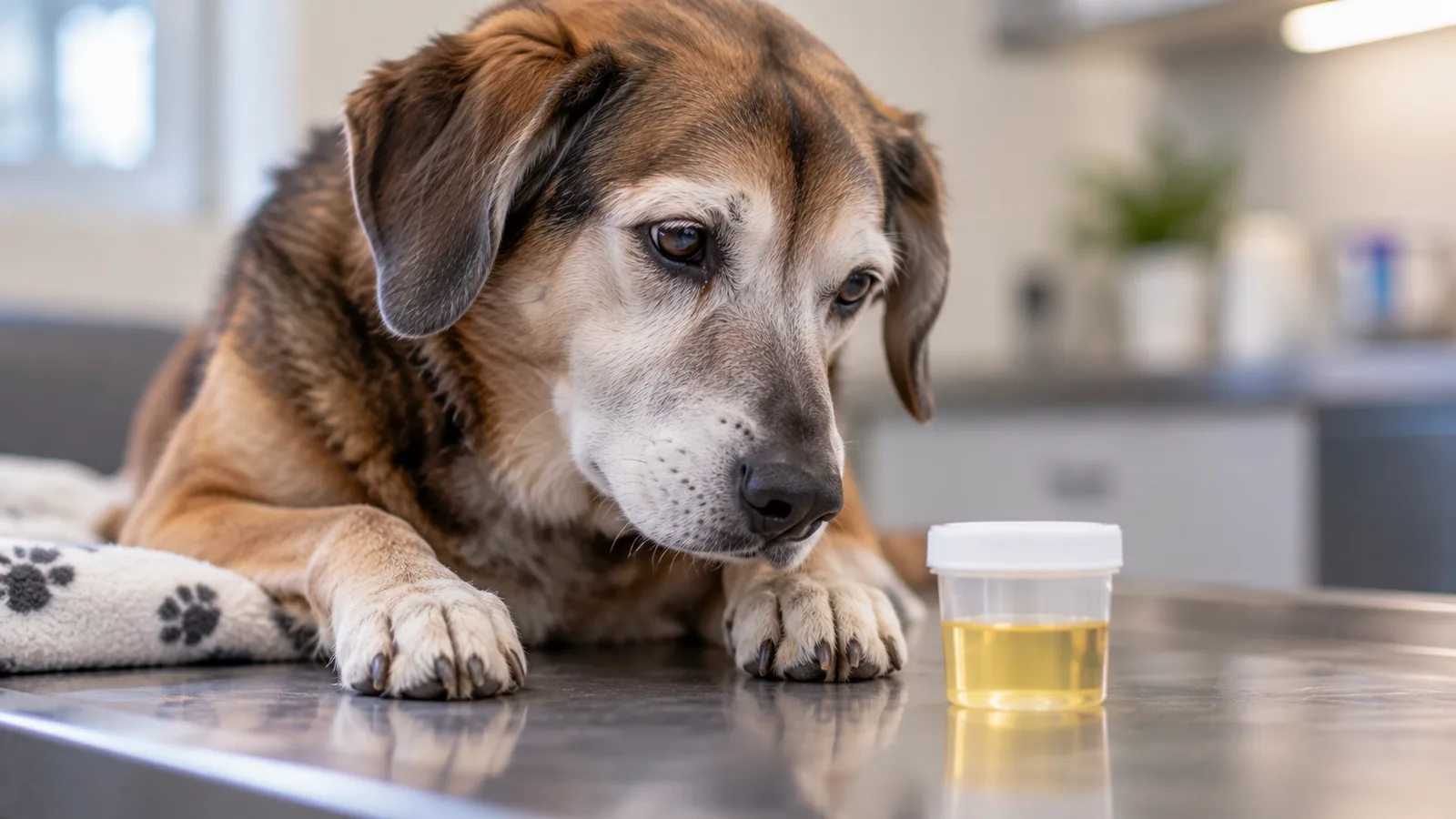
If you are weighing a prescription diet against surgery for your pet's bladder stones, the deciding factor is not preference, it is the mineral they are made of. Some minerals dissolve in urine that a therapeutic food has made less hospitable to them, over weeks of strict feeding while your pet stays uncomfortable; others will not shrink at all, and a diet trial that was never going to work only gives a stone more time to move. Nothing on the outside tells you which one you have, so imaging and a urine sample come before the decision, not after it. That risk is highest in male pets, especially cats and small dogs, where a shifting stone can block urine flow completely and turn into an emergency.
You should not have to guess which path your pet's stones call for. Rustebakke Veterinary Service in Clarkston starts with x-rays, ultrasound, and in-house lab work, because the size, number, and likely makeup of the stones are what make the diet question answerable at all. Nutritional counseling is how we build the feeding plan around that answer, whether it means a dissolution trial we supervise or the food that follows surgery to remove the stones, paired with extra water intake and recheck imaging so you are not doing this again next year. We keep room for same-day exams, so call ahead and get your pet in at the first sign of straining, because a pet trying to urinate and producing nothing needs to be seen right away.
Stone Facts Worth Knowing Before You Decide
- The mineral decides the treatment: struvite stones often dissolve on a therapeutic diet, while calcium oxalate stones have to come out.
- Imaging and a urine sample come first, because size, number, and location tell us whether a diet trial is worth the weeks it takes.
- A pet straining and producing nothing is an emergency, and male cats and small male dogs carry the highest risk of a urethral blockage.
- Preventing a repeat comes down to the right food, more water through the bladder, and recheck imaging on a schedule we set together.
So What Exactly Is a Bladder Stone?
Bladder stones, called uroliths in veterinary medicine, form when dissolved minerals in urine concentrate and crystallize into solid masses. Most build slowly over weeks to months, well before anything looks wrong at home.
Uroliths can sit anywhere along the urinary tract, and the ones in the kidney frequently cause no signs until one drops into a ureter, the narrow tube running toward the bladder. Bladder stones are what we see most in dogs and cats, and they're the ones a therapeutic food can reach, since urine pools there long enough for the chemistry to change.
A stone's damage is mechanical at first. It rolls against the bladder lining with every step and every jump off the couch, and that constant contact inflames the tissue. Pink urine and sudden urgency are the early clues that inflammation produces. Not every stone makes noise, though. Some turn up by accident on an X-ray taken for another reason, or after a urine sample at routine wellness visits comes back full of crystals.
What Puts a Dog or Cat at Risk for Stones?
Several influences usually stack up before a dog or cat forms a stone, and prevention has to work on each of them.
- Infection: The bacteria behind many urinary tract infections split urea into ammonia, and alkaline urine lets struvite crystals fall out and clump together. That is the usual story in dogs. Cats build struvite more often with no bacteria at all.
- Food and water intake: Diets heavy in the minerals that make up stones hand crystals extra raw material. Dry food alone keeps urine concentrated, and concentrated urine is where crystals find each other. Cats are the worst offenders, since plenty of them drink far less than their bodies need.
- Metabolic disease: Diabetes puts sugar into the urine and changes its chemistry in ways that favor both bacteria and crystals. Cushing's disease and certain liver conditions tilt things the same direction, so bloodwork belongs in the workup when stones keep coming back.
- Breed and family history: Miniature Schnauzers, Shih Tzus, Bichon Frises, Yorkshire Terriers, and Lhasa Apsos form stones more than most breeds. Dalmatians and English Bulldogs carry a urate tendency, and Persians and Himalayans sit higher on the feline list.
- Body condition: Obesity is linked to increased risk of bladder stones compared to pets held at a lean, healthy weight.
When Does a Bladder Stone Become an Emergency?
A stone becomes an emergency the moment urine can't get out. One that slips into the narrow urethra can shut off flow entirely, and urinary obstruction turns life-threatening within a day or two as potassium climbs in the bloodstream. Male cats and small male dogs run the highest risk. In cats, the plug doing the blocking is often crystals and mucus rather than a true stone, but the emergency is identical.
A blocked pet looks different from one with a simple bladder infection. The straining turns constant and produces nothing, the belly goes tense and painful, and vomiting, hiding, or collapse follow as waste builds up. Cats in that state are often mistaken for constipated, because they'll sit in the litterbox and push with nothing to show for it.
Short of a full blockage, stones still do damage on a slower clock. Pressure backing up toward the kidneys puts those at risk, and a bladder wall under constant irritation thickens and scars. A quick call before you leave the house lets us get ready for your arrival, and we offer urgent care during our open hours. After we've closed, a pet who can't urinate needs the nearest veterinary emergency hospital that night, not a wait until morning.
How Would I Know if My Dog or Cat Has a Stone?
Most of what you'd notice happens at the bathroom end of things: repeated trips that produce a few drops, visible effort in the squat or the box, pink or cloudy urine, accidents from a housetrained pet, and a lot of licking afterward. Appetite and energy usually slide as discomfort wears on.
The two species tip their hand differently. A dog asks out over and over, then strains in the grass with little to show for it. A cat quits the box for tile or the bathtub, and the household reads it as spite when the problem is medical.
| What you're seeing | How soon to be seen | Where we'd start |
| Faintly bloody or cloudy urine, trips coming closer together | Within a day or two | Urinalysis and imaging to find the source |
| Accidents indoors, pacing at night, picking at meals | This week, sooner if it's building | Full workup, culture if bacteria are suspected |
| Hard effort producing drops, crying in the box, tense belly | Right away | Emergency exam and pressure relief |
| Vomiting, weakness, hiding, nothing passed in 12 hours | Immediately, no waiting | Stabilize, unblock, correct the potassium |
Anything in the lower half of that table is worth a same-day exam, and a call on your way lets us have things ready.
How Do We Figure Out Which Stone We're Dealing With?
Diagnosis takes imaging and urinalysis together: imaging gives us number, size, and location, while the urine reports pH, which crystals are forming, and whether infection is part of the problem.
It starts with the story: how long the straining has gone on, what the urine looks like, what your pet eats, and whether there's been a urinary infection before. Feeling the belly sometimes finds a stone large enough to palpate, though a painful, tense abdomen can hide one completely.
Most stones are dense enough to appear on film, but some, including many urate and cystine stones, are nearly invisible on a radiograph. Radiographs and ultrasound work best as a pair, since ultrasound catches what X-rays miss and shows the wall thickening that comes with long-term irritation. A CT scan gives the finest detail in complicated cases; that one happens at a specialty hospital, and we set up the referral for you.
The only way to know a stone's makeup for certain is to analyze the stone itself once it's out or passed, so every one we retrieve goes to a laboratory.
Does My Pet Need a Diet Trial or Surgery?
Whether your pet needs a diet trial or surgery comes down to the mineral type, with size and location weighing in. A stone too large to pass safely, or a pet who is already obstructed, points toward removal no matter what it is made of.
| Stone type | Dissolves with diet? | What drives it | Usual path |
| Struvite | Often, over weeks | Infection in dogs, concentrated urine in cats | Supervised diet trial, infection treated alongside |
| Calcium oxalate | No | Concentrated urine, breed tendency, high urine calcium | Removal, then lifelong prevention |
| Urate | Sometimes | Dalmatians, Bulldogs, liver shunts | Diet and medication, removal if it won't shrink |
| Cystine | Sometimes | Inherited defect, more common in intact males | Diet and medication, often removal and neutering |
Can a Prescription Diet Dissolve My Pet's Stones?
Dietary treatment of bladder stones works by lowering urine pH and cutting the minerals that feed a struvite stone until it shrinks away over several weeks, and nothing about that chemistry touches calcium oxalate.
A trial only works when the therapeutic food is the entire diet. A dental chew, a strip of bacon, or a few mouthfuls from the other pet's bowl can hold urine chemistry right where the stone wants it.
Nobody should run a dissolution trial unsupervised. Our veterinarians repeat imaging to confirm the stone is shrinking, recheck urinalysis to see where pH landed, and treat infection alongside the food. Bacteria burrow into a stone's crevices where antibiotics never reach full strength, and that sheltered pocket rebuilds struvite as fast as the diet dissolves it. If nothing has changed after a reasonable stretch, the mineral isn't what we hoped and it's time to change course. Your pet stays uncomfortable through those weeks, which is the real cost of the slower path.
What Happens During Surgery to Remove Bladder Stones?
Surgery to remove bladder stones means a cystotomy, an incision into the bladder under general anesthesia so the stones can be lifted out directly. It clears the bladder in one step instead of over weeks, and most pets are urinating comfortably again within a couple of days.
While the bladder is open, the lining gets examined for thickening, polyps, or the pinpoint irritation that follows a long-standing stone, and the urethra is flushed so no small fragment is left behind. Surgical stone removal is the answer whenever a stone is too large, too numerous, or the wrong mineral to dissolve.
Recovery is usually uneventful. Plan on pain medication for several days, antibiotics if a culture called for them, leash walks instead of sprints while the bladder wall heals, and a little blood in the urine that fades. The incision has to stay dry and unlicked, which is what the cone is for.
What If My Pet Can't Urinate at All Right Now?
A pet who can't pass urine needs that blockage relieved before anything else gets decided. Relief generally means sedation, a urinary catheter passed to restore flow, and IV fluids to clear the potassium and waste that have stacked up.
While you are getting your pet to us, skip the home remedies. Pain relievers made for people top that list: ibuprofen injures the stomach and kidneys, and one dose of acetaminophen can kill a cat. A drugstore enema, the phosphate kind especially, throws a small pet's minerals into chaos. Pressing on a swollen belly risks tearing a bladder already stretched past its limit.
Once urine is moving and the bloodwork looks safer, there's room to plan. Sometimes a small stone can be flushed back into the bladder and managed with food. Sometimes the catheter is a bridge to surgery a day or two later.
How Do I Keep Stones From Coming Back?
Recurrence is common enough that prevention starts the day treatment ends.
Food does the heaviest lifting, and the right one depends entirely on what the laboratory reported. A diet that prevents struvite can encourage calcium oxalate, so guessing is worse than doing nothing. Nutritional counseling is where we match the formula to the stone, sort out what happens to treats, and handle the multi-pet kitchen where everybody samples everybody else's dinner.
Water is the lever you control at home. More bowls in more rooms, a fountain for the cat who only drinks from moving water, canned food replacing some of the dry, and a splash stirred into meals all raise urine volume. Cats who resist every one of those sometimes take in more fluid through a flavored hydration supplement mixed into food. Dilute urine is the best daily defense there is.
Recheck imaging catches a return while it is still loose crystal, well before it packs into a solid pebble. A film and a urine sample a few weeks after treatment, then at intervals we set by mineral type, beats a second surgery by a wide margin. Here in Clarkston, we would rather find that on a scheduled X-ray than in a crisis. Anything still changing urine chemistry gets managed on its own track: an infection confirmed clear with a follow-up culture, diabetes kept regulated, extra weight brought down gradually.
Bladder Stone Questions We Hear in the Exam Room
Will my pet have to stay on a prescription diet forever?
Most pets stay on a therapeutic food in some form. A dissolution food and a prevention food aren't the same product, so once the stones are gone we typically move from the one that dissolves to one that keeps urine chemistry steady long term. Pets whose trigger was a single treated infection can sometimes return to a regular diet with monitoring, while calcium oxalate formers usually do better staying on a therapeutic food for life. Rechecks tell us which group your pet falls into.
Can stones come back after surgery?
Stones can come back after surgery, and planning for that is part of good care. Surgery removes the stones present that day, but it doesn't change the urine chemistry that produced them, and calcium oxalate is the most stubborn repeat offender. What shifts the odds is everything that follows: the right food, more water, infection treated completely rather than partially, and recheck imaging that spots crystals before they've organized into something that needs removing again.
Could this be a urinary infection or bladder inflammation instead?
A urinary infection or bladder inflammation can look exactly like a stone, because the signs overlap almost completely. Straining, frequent trips, and bloody urine also come with a plain urinary tract infection, with feline idiopathic cystitis, a stress-linked bladder inflammation common in cats that involves no stone at all, and occasionally with a bladder tumor in an older pet. That overlap is exactly why imaging and a urine sample come before treatment. Guessing costs the weeks that matter most for a pet who does have a stone.
Choosing the Right Path for Your Pet's Stones
Most dogs and cats go back to ordinary bathroom habits once the right path is chosen. The hard part is usually not the treatment but not knowing which treatment, and that's what imaging and a urine sample settle. Rustebakke Veterinary Service will tell you what your pet's stones are likely made of, what each option asks of you at home, and what we'd choose if they were ours.
Schedule a visit at our Clarkston clinic if your dog or cat is straining, having accidents, or spending odd amounts of time in the litter box, and if nothing is coming out at all, call us right away or head for the nearest veterinary emergency hospital after hours.