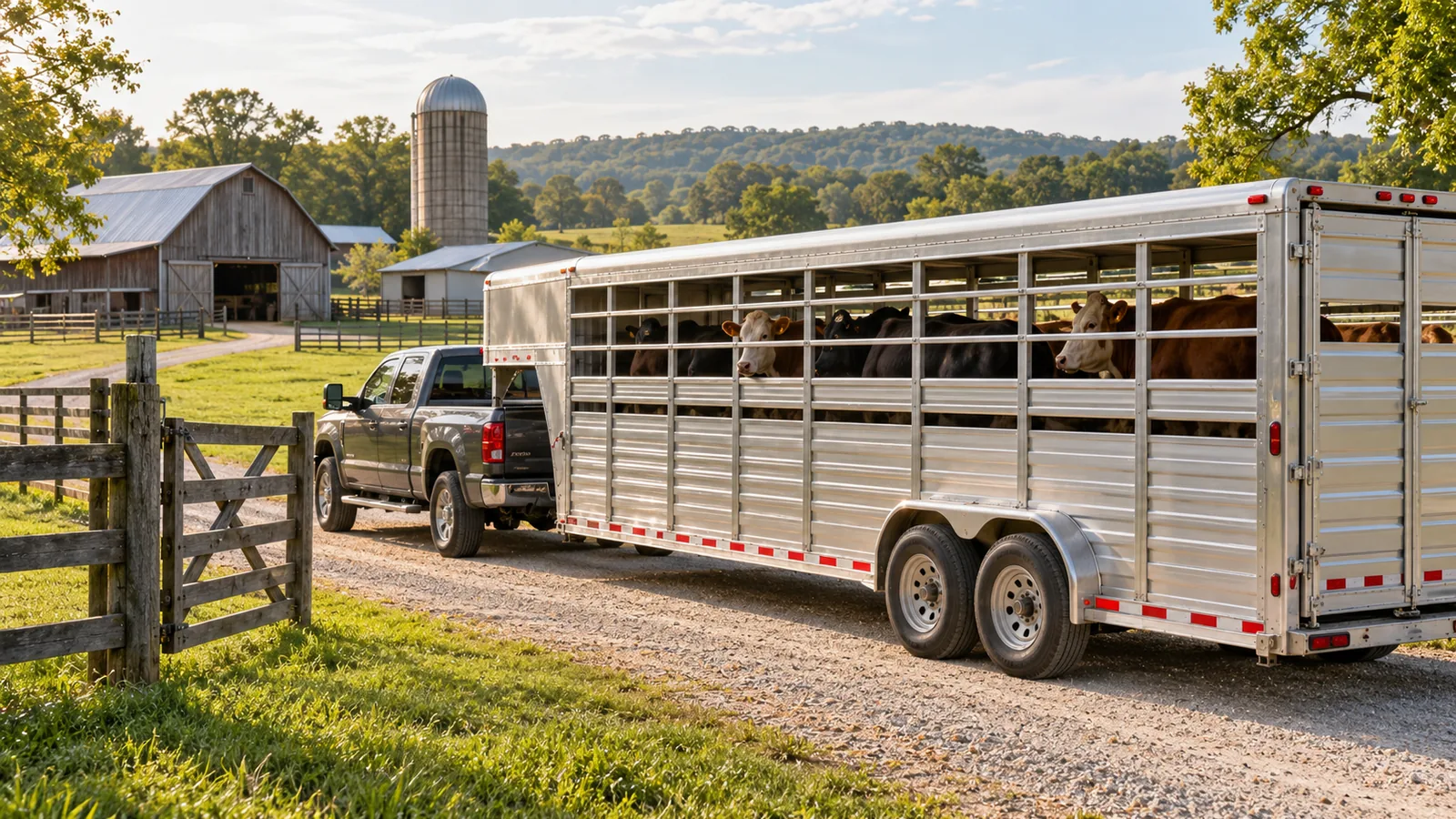
Biosecurity for an animal you have just bought or brought back home comes down to keeping it fully apart from the rest of your herd for about 30 days, with its own space and equipment and a daily check on how it is doing. That window exists because the diseases that ride along with a purchased or returning animal are usually incubating rather than visible on arrival day. Sale yards, show pens, and the stress of hauling all raise the odds that an animal who looks healthy is still shedding something. A horse back from a summer of shows carries the same risk as a heifer bought at auction, and either can cost you far more than the purchase price.
It can be tough to keep a purchased or returning animal kept well away from the rest of the herd for a month. Rustebakke Veterinary Service in Clarkston writes herd health plans around this exact risk, and our large animal services cover health certificates, Coggins, and the testing that fits the species and the source. We can go over the records on an animal you are considering, and because we work on the farm as well as at the clinic, checking on it during quarantine does not mean loading it up again. If you have a purchase or a return trip on the calendar, map out the quarantine plan with us before the trailer pulls in.
Biosecurity for New Arrivals: The Basics
- Thirty days of real separation, with their own water tub, feed pan, and boots, keeps much of what a purchased animal carries from reaching the animals you already have.
- An animal who looks healthy on arrival day can still be incubating something, so the calendar decides when they join the group, not how they look.
- Testing is species-specific: bovine viral diarrhea (BVD) and Johne's disease in cattle, caseous lymphadenitis (the abscess disease) plus ovine progressive pneumonia (OPP) in sheep or caprine arthritis encephalitis (CAE) in goats, and in horses a Coggins test for equine infectious anemia along with a strangles history.
- The trailer, the clippers, and the water bucket that traveled with an animal carry risk too, not just the animal.
What Does Biosecurity Mean on a Working Farm?
Biosecurity means keeping an infectious disease from arriving on your place and from spreading once it's here. In practice, biosecurity on a small farm comes down to everyday decisions about which animals come in, which people and vehicles cross the property, and which buckets and boots get shared between pens.
Animals moving onto the place are the highest-risk route, because a purchase brings their whole history along: every pen they stood in and every parasite picked up on the way. Fence line contact with a neighbor's cattle matters too, but a purchase is what puts a new pathogen inside your own pens, and the cost usually lands on production rather than on the one animal you bought. A single heifer carrying BVD can wreck a breeding season, and caseous lymphadenitis in a goat herd can become a management problem you live with for years.
What Should You Ask Before You Buy an Animal?
Before you buy, ask what the herd is vaccinated for, what's been tested and when, whether anything has aborted, scoured, or coughed in the past year, and whether you're welcome to walk through and look at the stock that isn't for sale.
How Do You Tell a Good Source From a Risky One?
The clearest signal is transparency: a seller who hands over vaccination dates and test results, and gives a straight answer about last year's trouble, is usually running a herd they aren't worried about. Vague answers, missing records, and a yard you can't walk through are warning signs. Look hardest at the animals that aren't for sale: body condition across the group, how the pens drain, coughs or crusty noses two pens over, and whether feet look sound. A sale barn gives you none of that, so a purchase there needs a stricter month, not a looser one.
Disease pressure isn't the same in every state, and an animal hauled across the Idaho line into Clarkston needs a health certificate anyway. Breeding stock carries its own questions, and our equine breeding services include a pre-breeding exam on a mare or stallion you're buying, which catches reproductive problems a general exam won't.
Why Does an Animal Who Looked Fine at the Sale Get Sick at Home?
Hauling is hard on an immune system: feed and water get skipped, the animal stands braced for hours, and stress hormones climb right when the body needs its defenses most. Add mixing with strange animals and shared surfaces, and animal movement becomes the most common way an infectious disease crosses onto a new property.
Shipping fever in cattle often breaks in the first two weeks after arrival, strangles in horses usually appears within a week or two of exposure, and Johne's disease can sit quiet for years while still shedding in manure.
How Do You Set Up a Quarantine Pen That Works?
A working setup is separate air, separate water, separate equipment, and separate boots for about 30 days. Put the new animal where they can't reach the herd through or over a fence, keep their own feed pan and tub down there, and do their chores last so nothing rides back up to the main group on your boots. A shared barn with no real air separation undoes the plan too, and runoff shouldn't drain from the pen toward the home pasture.
Keep a dedicated halter, fork, and pair of boots down there, and pull off coveralls on the way out. Some of what rides in can make people sick too, including the scours calves carry and the crusty orf (sore mouth) lesions on a new goat's lips, so wear gloves and wash your hands after chores. Thirty days is a minimum, not a guarantee, and if the animal coughs, scours, or spikes a fever in week three, the clock starts over.
What Should You Watch for Every Day?
Ten minutes a day with a thermometer and a notebook is most of the job, because a change only stands out against yesterday's numbers.
- Appetite and attitude: feed left in the pan, slow to come up, or standing away from where they usually stand.
- Breathing and temperature: coughing, nasal discharge, labored breathing, or a temperature above normal for the species.
- Manure: scours, straining, or consistency that shifts over a couple of days.
- Feet and legs: limping, heat in a foot, or the smell that goes with foot rot.
- Skin and discharge: lumps at the jaw or throatlatch, hair loss, crusty patches, or discharge from eyes, nose, udder, or vulva.
- Condition and production: body condition across the month, and milk volume in a fresh purchase.
Plenty of what matters is subclinical, meaning the animal carries it without looking sick, and that's what testing is for. Fecal egg counts, samples read here under the microscope, and the bloodwork we recommend for the species and the source give you an answer before anything mixes in. If something looks wrong in the pen, call us that day rather than waiting two days to see if it passes.
Which Diseases Come Home With Each Species?
What arrives depends on what you bought. Cattle bring respiratory disease, reproductive losses, and internal parasites. Sheep and goats bring worms, caseous lymphadenitis, and foot rot. Horses bring strangles and equine herpesvirus. Poultry bring respiratory disease and whatever the wild birds around the coop are carrying.
| Species | Testing and checks worth asking about | What a result changes |
| Beef and dairy cattle | BVD, Johne's disease, and bovine leukosis, a trichomoniasis test on any bull, plus TB or brucellosis depending on the source | A persistently infected animal sheds BVD constantly and shouldn't reach the herd |
| Sheep and goats | Fecal egg count, caseous lymphadenitis, OPP in sheep, CAE in goats, and a foot check | A positive usually means a lasting management change rather than a treatment |
| Horses | Coggins, a strangles history, and twice-daily temperatures for the first two weeks | One fever caught early can keep a barn-wide outbreak from starting |
| Poultry | Source flock status, plus a look for respiratory signs, mites, and leg lesions | Birds keep meeting wild birds after quarantine ends, so coop habits matter long-term |
What Comes Home With New Cattle?
On a milking operation, dairy biosecurity reaches past the quarantine pen into milking order, colostrum sourcing, and calf housing, because a purchased cow can carry Johne's disease or BVD for years before anyone sees a clinical case. Milk a new cow last, skip pooled colostrum from untested animals, and watch volume and udder health through those first weeks. In beef herds the first two weeks are mostly a respiratory watch, and vaccinations and herd health plans for new arrivals work better when the timing accounts for the stress of hauling.
What Comes Home With New Sheep and Goats?
Caseous lymphadenitis, CAE, OPP, foot rot, and dewormer-resistant parasites all arrive with new sheep and goats, so a fecal exam and a strategic deworming belong in the quarantine plan before those animals touch the home pasture. Trim and look at every foot on arrival, and keep newcomers off the wet ground your flock uses. An abscess at the jaw or in front of the shoulder is worth sampling rather than opening in the pen, since pus from a caseous lymphadenitis abscess contaminates the ground for the rest of the flock.
What Comes Home With New Poultry?
A flock doesn't have to leave the property to get sick, because wild bird and rodent exposure brings avian influenza and other respiratory diseases into a coop through shared feed, standing water, and contaminated boots. Adding birds to an established flock is the other big risk, so starting with one group and keeping it closed is safer when the setup allows. Coop-only boots, covered feed, a mite check on new birds, and a vaccination plan that fits your flock cover much of the rest. Several birds down or dead at once is a call to make right away, since some avian diseases are reportable to state animal health officials.
What About an Animal Coming Home From a Show or Breeding Farm?
An animal coming back from a show, a fair, or a breeding farm is a new animal to your herd. They've spent days sharing air, water, and shavings with stock from dozens of operations, so show animal health comes down to what you pack, what you let them share, and how you unload at home. They go into the quarantine pen for the same month with the same separate equipment, and horses get their own buckets, stall tools, and a thermometer, because a fever usually shows up before any nasal discharge.
| Before you load | At the show | Coming home |
| Papers and vaccines current, and an animal that is eating, bright, and sound on loading day | Your own feed, buckets, and grooming tools, nothing borrowed | Unload into the quarantine pen, not the home pen |
| Trailer stripped out and disinfected | No nose-to-nose visiting in the aisle | Temperature and appetite checked daily for at least two weeks |
| A thermometer and a record sheet in the kit | Hands washed between barns | Trailer cleaned again before it's parked |
Equine wellness exams before the season starts give us weight, temperature, vaccine timing, and a picture of what normal looks like for that horse. Testing a returning animal makes sense when they ran a fever away from home, came back off their feed, or stood next to something that later turned out to be sick.
How Do You Build a Biosecurity Plan for Your Own Place?
Three goats and a steer still need a plan, and hobby farm biosecurity holds up better written down: sourcing standards, quarantine length, visitor rules, equipment cleaning, and who to call when something looks wrong. A page taped inside the feed room door beats a plan that lives in your head.
What Makes a Written Plan Stick?
Start from what you already do, and set rules the family will follow on a cold February morning. Everyone who does chores needs to know the order pens get fed, which boots belong where, and that visitors stay out of the quarantine area. Read it over once a year to fix what didn't work.
Around the Lewis-Clark Valley, shared fence lines, borrowed equipment, and a bull that goes back and forth connect two operations whether anyone planned it or not, so neighbors belong in the conversation. The farm dogs and barn cats count as well, because they move freely between groups and can carry parasites that cause abortions in cattle, sheep, and goats: Neospora from dogs and Toxoplasma from cats. Wellness visits and parasite prevention for them belong in the same plan.
How Does Your Veterinarian Fit Into the Plan?
Our veterinarians can judge whether a scour in the quarantine pen needs fluids or means the whole group needs testing, which tests are worth running on an animal from that source, and when a vaccine is better given a week after arrival than on arrival day. Testing and health certificate requirements for crossing a state line change, and so do regional disease patterns, so settle those details before you buy.
Questions We Hear Before a New Animal Comes Home
Can I skip the month if the seller sent health papers?
A health certificate says a veterinarian looked at that animal on one day and saw nothing wrong. It isn't a test for most of what travels with livestock, and it can't see an infection that's still incubating. Papers are a good sign about the seller and a requirement for crossing state lines, but the month is what catches the problem the exam couldn't.
What if I don't have a separate pen?
Most places have more options than it first seems. A roll of temporary electric fence with an empty strip between it and the herd, a corral at the far end of the property, a stall with its own outside door, or borrowed space at a neighbor's can all work for 30 days. The non-negotiables are no shared water, no nose-to-nose contact, and chores done last. If none of that is possible, buying from a herd with current testing lowers the risk you're taking on.
Does a horse who left for one day need the full 30?
How long a horse needs depends on what they were exposed to. A horse who hauled out, worked, and came home without sharing water or touching another animal is in a different situation from one stalled in a row with strange horses, and that second horse gets the full window, as does any horse who ran a fever away from home. Either way, take temperatures twice a day for a week or two and keep their buckets to themselves.
Protecting the Herd You Already Have
Quarantine costs a second water tub, a second set of chores, and a month of patience while the animal in the pen looks perfectly fine. It's still the cheapest insurance on the place, because the alternative is treating a problem after it has reached every animal you own.
Rustebakke Veterinary Service works with farms around Clarkston on the sourcing questions, the testing, and the pen setup that fits the species and the ground you have, so schedule a herd health visit before the trailer leaves rather than after.